 Yorum Yap
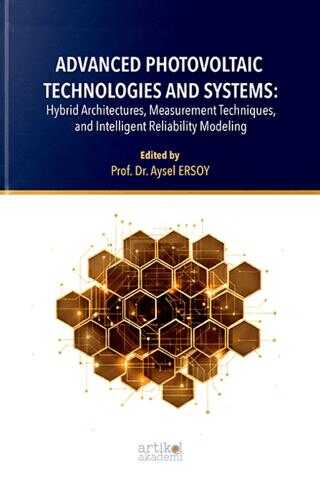
Photovoltaic (PV) energy has evolved from a rapidly expanding renewable option into a core pillar of modern power systems. Yet the PV sector is no longer defined solely by incremental improvements in conventional crystalline silicon modules. The period between 2023 and 2025 has marked an acceleration in technology diversification (TOPCon, HJT, xBC, and perovskite-based tandems), the adoption of advanced characterization methods, the widespread deployment of hybrid PV architectures, and the emergence of data-driven reliability and digital-twin-enabled asset management.
This book was developed to provide an integrated, engineering-oriented perspective on these developments. Rather than treating PV modules,
Tükendi
Gelince Haber VerPhotovoltaic (PV) energy has evolved from a rapidly expanding renewable option into a core pillar of modern power systems. Yet the PV sector is no longer defined solely by incremental improvements in conventional crystalline silicon modules. The period between 2023 and 2025 has marked an acceleration in technology diversification (TOPCon, HJT, xBC, and perovskite-based tandems), the adoption of advanced characterization methods, the widespread deployment of hybrid PV architectures, and the emergence of data-driven reliability and digital-twin-enabled asset management.
This book was developed to provide an integrated, engineering-oriented perspective on these developments. Rather than treating PV modules, performance losses, measurement techniques, hybrid system design, and reliability modeling as separate domains, the text connects them into a coherent framework. The aim is to support graduate-level education, industrial R&D, and practical decision-making in PV project development and operation.
The book is organized into five chapters and an introductory section. Chapter 1 reviews next-generation PV panel technologies and compares performance trends across emerging architectures. Chapter 2 examines the environmental and systemic parameters that govern real-world energy yield, moving beyond Standard Test Conditions. Chapter 3 introduces laboratory and field measurement techniques—from I–V characterization to optical and thermal diagnostics—along with advanced methods and certification concepts. Chapter 4 extends the discussion to hybrid PV systems, focusing on storage-coupled architectures and emerging PV-integrated energy systems. Finally, Chapter 5 addresses the modern reliability paradigm, including machine learning, digital twins, physics-informed degradation modeling, and bankability-oriented assessment.
By combining recent research findings with practical engineering interpretation, this book is intended to serve as both a reference work and a structured learning resource for the next generation of PV professionals.