 Yorum Yap
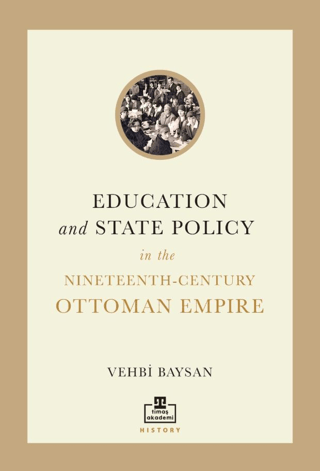
This book provides a comprehensive examination of the profound transformation of education in the Ottoman Empire during the nineteenth century. In this study, Dr. Vehbi Baysan traces the shift from a ulema’s medrese system to a centralized, state-controlled public education framework. The analysis begins with the pre-reform foundations, before examining the decisive challenges posed by Sultan Mahmud II’s reforms. Accelerated by the abolition of the Janissaries and the establishment of a modern army, these changes introduced pioneering military schools (Mekteb-i Harbiye, Mekteb-i Tıbbiye) and the first civil rüşdiye schools, redefining education as a core public policy concern.
Tükendi
Gelince Haber VerThis book provides a comprehensive examination of the profound transformation of education in the Ottoman Empire during the nineteenth century. In this study, Dr. Vehbi Baysan traces the shift from a ulema’s medrese system to a centralized, state-controlled public education framework. The analysis begins with the pre-reform foundations, before examining the decisive challenges posed by Sultan Mahmud II’s reforms. Accelerated by the abolition of the Janissaries and the establishment of a modern army, these changes introduced pioneering military schools (Mekteb-i Harbiye, Mekteb-i Tıbbiye) and the first civil rüşdiye schools, redefining education as a core public policy concern.
Focusing on the Sultan Mahmud II’s and Tanzimat eras, the book draws on Ottoman archival documents, official correspondence, and institutional developments to reveal the decision-making processes and the tensions between reformist administrators and the traditionalists. It details the emergence of central bodies, the Ministry of Public Education (post-1856 Islahat Fermanı), the Mekteb-i Mülkiye for civil servants, and early university efforts (Darülfünun) - all aimed at forging a new bureaucratic elite.
Extending beyond Istanbul, the work explores provincial expansion of public schooling, teacher training for men and women, minority and millet schools, and the rising demand for educated personnel amid legal and administrative modernization. By integrating institutional history with political reform and drawing on rich Ottoman sources, Dr. Vehbi Baysan illuminates education’s pivotal role in Ottoman state-building and its enduring legacy for the modern Turkish education system, offering a major contribution to the historiography of reform, governance, and educational history.