 Yorum Yap
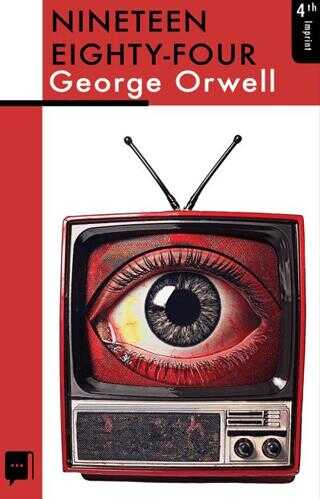
Nineteen Eighty-Four is a rare work that grows more haunting as its futuristic purgatory becomes more real. Published in 1949, the book offers political satirist George Orwell`s nightmarish vision of a totalitarian, bureaucratic world and one poor stiff`s attempt to find individuality. The brilliance of the novel is Orwell`s prescience of modern life—the ubiquity of television, the distortion of the language—and his ability to construct such a thorough version of hell. Required reading for students since it was published, it ranks among the most terrifying novels ever written.
Tükendi
Gelince Haber Ver1984 is not only a story of surveillance and control. It is about the quiet, unbroken place inside the human spirit that refuses to disappear. Winston Smith lives in a world where language has been narrowed, memory rewritten, and even thought observed. Yet something in him continues to ask, to remember, to remain free.
This novel shows how easily truth can be shaped and how fear can be used to guide entire societies, but it also shows how a single human being, simply by refusing to forget themselves, can disturb the order of a regime. Orwell reminds us that freedom begins long before any revolution. It begins in the act of seeing clearly.
1984 endures because every age must decide what it means to remain human. It calls us to guard our language, to claim our memories, and to stay awake in a world that often encourages us to look away. This is not a book of despair, but an invitation to recognize the quiet, persistent light that survives in every person, even in the darkest times.
As long as one person can still say I remember, the future is not yet written.