 Yorum Yap
The first woman to win a Pulitzer Prize, for her novel "The Age of Innocence", Edith Wharton was discouraged by her mother from pursuing her writing at an early age. Despite this she would go on to produce a prolific body of work which included many novels and short stories. Characteristic to her work is the subtle use of dramatic irony and having grown up in a prominent New York family she would become one the most astute critics of pre-World War I upper-class society.
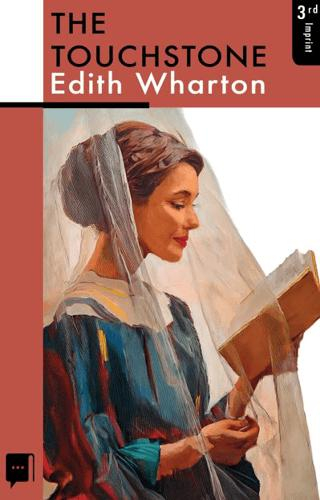
In the "Touchstone" we find the story of Stephen Glennard, who spurned the love of the tortured novelist Margaret Aubyn. When Margaret dies, Stephen, who is failing in his career, sees an opportunity to gain from her notoriety so that he may afford to marry his beau
Tükendi
Gelince Haber VerStephen Glennard lives on the fragile edge between aspiration and limitation. He loves deeply, but cannot afford the life that love requires. When he finds himself in possession of the private letters of Margaret Aubyn, a brilliant and revered writer who once entrusted him with her most intimate thoughts, he realizes that her words may hold the power to transform his future. What begins as temptation soon becomes decision, and decision becomes destiny.
As success gradually gathers around him, Glennard discovers that prosperity cannot silence the deeper voice within. The past does not remain where it was left. It lingers, shaping the present and measuring the truth of who we become. In the presence of love, and in the solitude of conscience, he must confront the invisible cost of his own choices.
With extraordinary psychological insight and emotional precision, Edith Wharton reveals the fragile boundary between private loyalty and public success. The Touchstone endures as a powerful meditation on ambition, memory, and the moral weight of what we choose to value.